Zobrazují se příspěvky se štítkemDrawings. Zobrazit všechny příspěvky

pátek

Megalodon (drawing)


Pencil on A3, high quality, acid free paper (this is a photo only - not a scan).      


Prehistoric levianthan


 For more than 16 million years, Megalodon was one of the most fearsome levianthans of prehistoric seas. Fossil excavations suggest that it was present in all of the world´s subtropical to temperate oceans and seas. The maximum length of a full grown Megalodon exceeded 20 meters /65 ft/. At this length, its body mass could reach more than 100 metric tons.
 Although, its taxonomic assignment is still the subject of dispute, in shape Megalodon teeth resemble the teeth of the Great White Shark. These two species were contemporaries. The earliest fossil remains of the Great White Shark that have been excavated so far are 16 million years old. Except the considerable size difference, Megalodon teeth were much more robust and saw-edged. Thus Megalodon teeth were well adapted to slice large chunks of flesh. All the available evidence suggest that it was a highly specializes Macro predator which primarily fed on large toothed whales. Many whale fossils have visible bite marks corresponding to the unique shape of its teeth and the overall bite distribution pattern suggest a very effective hunting strategy. The prey had been primarily immobilized by biting of its locomotive organs before it was killed and fed on. The first strike came from below and was always violent and devastating, thus minimizing the risk of injury from the prey.

 According to our current knowledge, 1.5 million years ago Megalodong disappeared from the seas. What caused its extinction remains mystery. But most probably it was a combination of different factors. The most profound factor was a series of large climatic changes that disturbed its habitat, causing considerable decline in food supply.
 Because from the paleontological point of view, Megalodon became extinct relatively recently /the extinction of dinosaurs is dated back to 66 million years ago/ many theories exist, about how it survived in the deep oceans.

čtvrtek

Ancient Egyptian Capital of Waset (Part 1)


Waset also known as Thebes in Greek, was the political center of Ancient Egypt during much of the New Kingdom period (ca. 1550 BC - 1070 BC). This was a golden age of unprecedented prosperity and military expansion. Egyptian armies led by their living gods, were marching as far as modern day Syria, Turkey or Ethiopia. To worship their deities and to commemorate own military achievements, Egyptian Pharaohs were organizing grand-scale construction projects. Employing thousands of people, they were building massive temple complexes with no parallel in any other civilization. Even after the political center had been moved to the Nile Delta, Waset remained a religious center for many centuries thereafter.

Today Waset area, situated around the modern day city of Luxor, still represents the greatest concentration of temples in Egypt. Although we can admire primarily the remaining sacral architecture, Waset was a living city with some 40-80 000 inhabitants. Unfortunately only the religious buildings were made of stone blocks and the most common building material were adobe bricks. Thus ordinary dwellings, administrative buildings or even royal palaces virtually vanished under the modern house-development.

Egypt is one of those countries which are heavily polluted by mass-tourism. Sacred places once opened only to a few chosen individuals are now crowded with visitors. And therefore I decided to show the beauty of the Egyptian art and architecture without this disturbing element. Hence some of the following photos were software-enhanced. The opening visualization is based on a scaled-down model of temple of Amun which is currently on display in the entrance hall of Karnak Temple.


    Drawing of the mortuary temple of Pharaoh Ramesses II.


Luxor Temple


 Luxor Temple was dedicated to the sun god Amun-Re and like other Egyptian temple complexes, it was a result of continual construction. The development of Luxor Temple lasted for 3000 years and even today due to the construction of mosque of Abu el-Haggagit within the inner court, it is still used as a religious center.
The core of Luxor Temple was built by Pharaoh Amenhotep III a great builder who left his imprint not only on Luxor and Karnak temples, but also decided to build an enormous mortuary temple on the west bank of the Nile. Another Pharaoh who built extensively in Luxor Temple was Hatshepsut. Unfortunately most of her work was later replaced in order to erase her name from the recorded history. Further great expansion came with the reign of Ramesses II (1279 BC - 1213 BC). At this period Luxor Temple had gained its final shape, although some minor expansions were made in the following centuries.


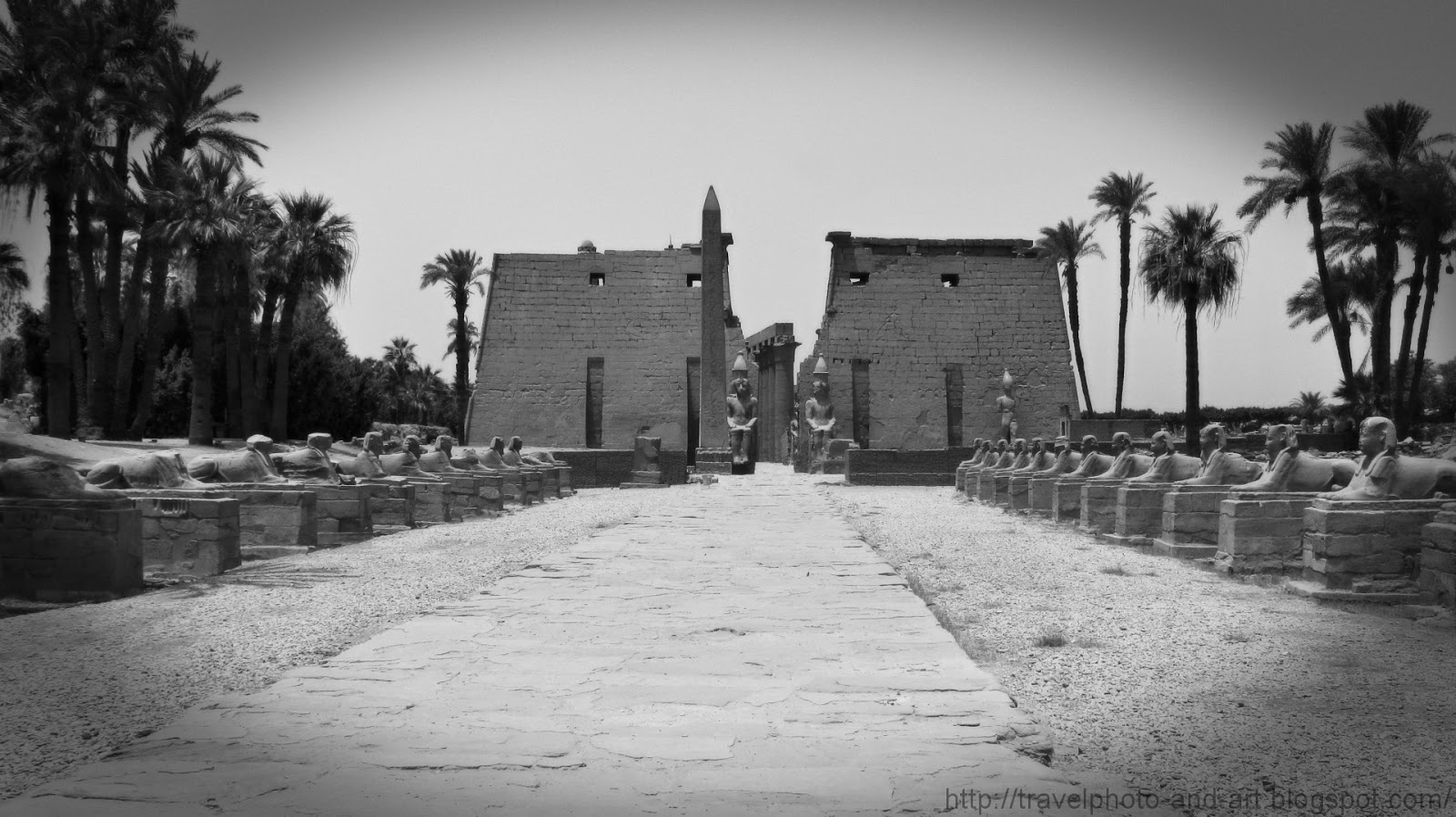
Some 300 years after Ramesse II had largely expanded Luxor Temple, Pharaoh Nectanebo I built this impressive avenue with hundreds of human-headed sphinxes. Originally it was a 3 km long  processional avenue to Karnak Temple.

The entrance to Luxor Temple was guarded by six colossi of Ramesses II and two obelisks. One of the obelisks is now placed at the center of the Place de la Concorde in Paris.


                     Ramesses II depicted during the famous battle of Kadesh.

Colossi of Ramesses II

The great Court of Rameses II formed by huge papyrus-bud columns.


středa

平遥

The fortified city of Pingyao    


Although the People´s Republic of China is a quickly changing country. Building its new infrastructure and modern day industry at an amazing pace. There are still some places, that preserve its ancient appearance. And one of them is the  fortified city of Pingyao.

Initially founded during the reign of emperor Xuan Wang of the western zhou dynasty (827BC-782BC), Pingyao still preserves its imperial layout from the Ming dynasty.
Partly due to a flood in 1977 which had been diverted by the Ming walls, thus saving the inner city from the worst damage, the imperial city and its walls survived a proposed modernization in 1981. This modernization involved the removal of walls and the construction of wide streets.
In 1997 Pingyao was declared a UNESCO World Heritage Site and since than all construction projects that would affect its historical appearance are forbidden.
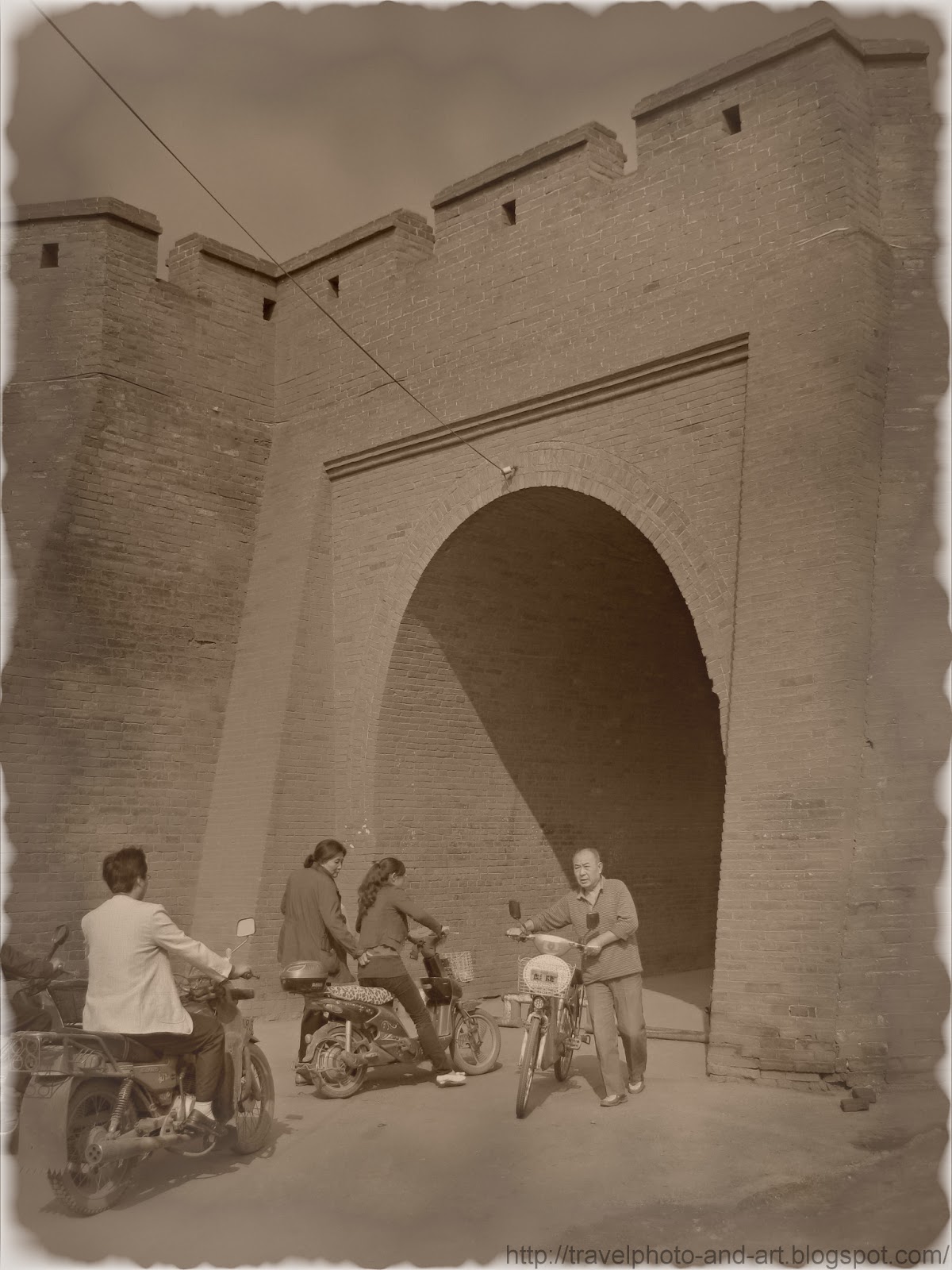
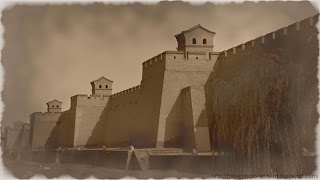
Today we can admire its overall tortoise shape which is outlined by a 6km long and 11m high brick wall. There are two wengcheng gates with gate towers at the east, two at the west and one gate on each remaining side. Additional simple gates were created later to make access to the old city easier.

To strengthen its defense 72 horse-face towers were incorporated into the walls. There are also additional observation towers and more elaborated corner towers. To further improve its defense a deep moat was dug out around the walls. All together these fortifications represent a unique example of a well preserved Ming walled city.


The old city itself still retains its imperial layout from the Ming and Qing Dynasties. Although some buildings were newly rebuilt or even replaced with more modern structures, the majority still consists of old Ming and Qing-style residences. Depending on the wealth of its former owner, these residences differentiate in size and decoration. Except defense and residential structures Pingyao offers also beautiful examples of temple or administrative architecture.
But what makes this place really unique is its non-sterile atmosphere. The old city is still inhabited by some 50,000 residents. And thus you can see common people selling fruits, vegetables and many other types of goods. Small children playing in the streets and people performing their day-to-day activities like washing laundry or lunching. In combination with the old architecture this place will leave a lasting impression on you.

 
Getting there:

Pingyao is situated in the Shanxi province, some 80km from the provincial capital, Taiyuan.

Beijing-Pingyao:
In Beijing go to the West Railway Station and buy a ticket from Beijing to Taiyuan and from Taiyuan to Pingyao. The train connection is excellent. The journey from Beijing to Taiyuan takes only 3 hours with a high-speed train and there are at least 12 daily connections. From Taiyuan to Pingyao it takes one and a half hour and the train connection is even more frequented. The old city is within 5 minutes walk from the train station.  

If you would have to buy train tickets outside of Beijing and other major cities, be prepared for long queues and the absence of English speaking personnel or even basic signs in English.
But all you have to do is to write everything on a paper and show it to the personnel. If possible try to find Chinese characters for requested destination.

Remember to keep your ticket the whole ride, coz train tickets are always checked when you exit a train station.

The Ming Walls of Pingyao:


The Old City of Pingyao:


Beijing-Pingyao: